





































2015年起

工作原理

立即注册

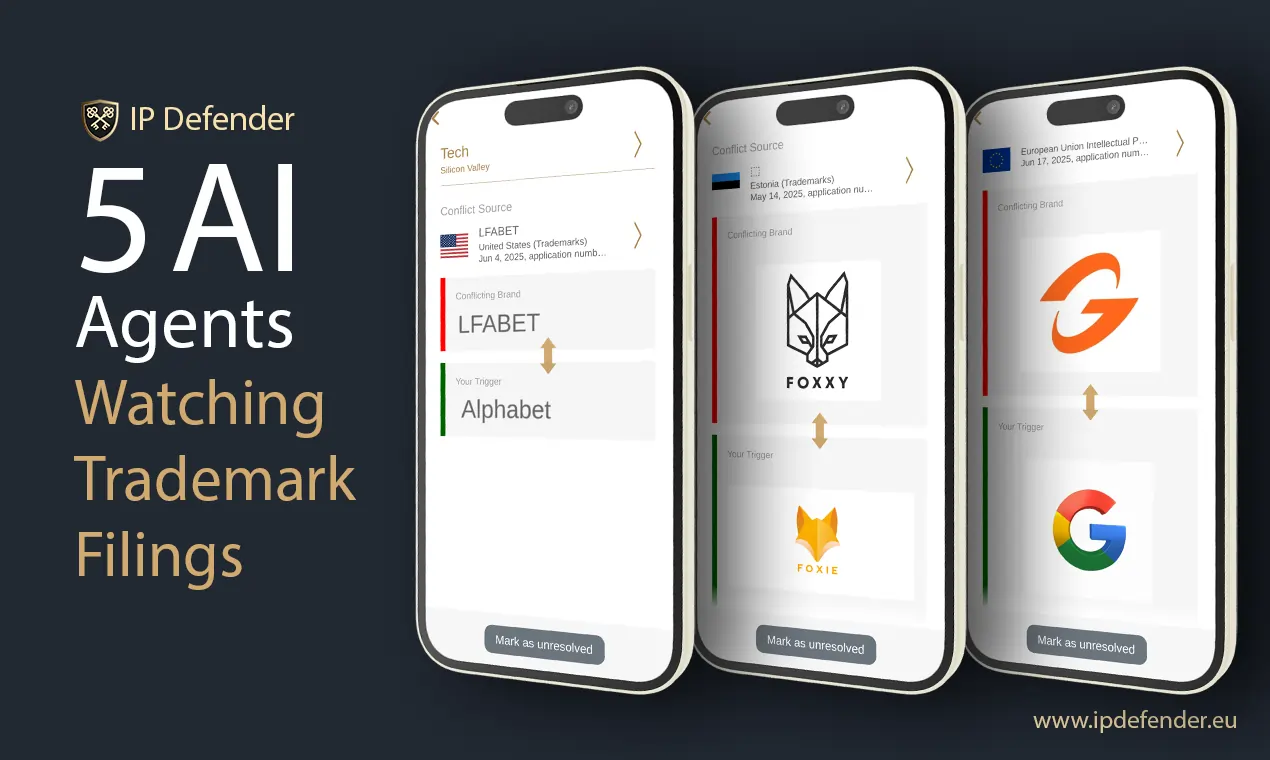
创建账户。将您的商标添加至系统,其余交给我们。

商标监控

我们持续监控您选定国家内的新商标申请。

立即行动

一旦发现侵权行为,我们将立即通知您,助您及时采取行动,守护品牌权益。

使用 IP Defender 的优势

  1. 降低法律成本:在内及早发现侵权行为,从而节省律师费用,避免高昂的诉讼支出。
  2. 更强大的商标组合:维护具备抗辩力的商标,吸引潜在投资者与买家,助力品牌持续增长。
  3. 强化法律立场:留存品牌保护工作的详尽,为应对潜在纠纷奠定坚实的法律基础。
  4. 提升品牌信心:借助我们的服务,有效管控竞争对手,守护您品牌的宝贵声誉。
开始免费试用


未对商标与品牌进行侵权监控的风险

  1. 并购:商标组合中的漏洞可能引发并购后的法律风险,令潜在买家或投资者望而却步。
  2. 声誉受损:侵权者可能注册近似名称,导致客户混淆,进而损害您的品牌声誉。
  3. 丧失法律权利:疏于主动监测和维护您的品牌权益,将削弱法律保护,并面临的风险。
  4. 全球侵权风险:侵权者可能在多个国家悄然注册商标,令全球品牌保护举步维艰。

您的品牌最为宝贵

商界领袖与法律界权威已达成明确共识:您的品牌不仅价值非凡,更是您的核心资产,对其保护不容妥协。

品牌是您对企业最重要的投资。

史蒂夫·福布斯

在公司所拥有的一切资产中,品牌无疑是最重要、也最难守护的。

赛斯·戈丁

商标权利人必须 vigilant 地监控其商标,以防淡化与侵权;否则可能面临权利丧失的风险。

美国最高法院,1995 年

为什么选择 IP Defender?

  1. 实力见证:自 2015 年起备受信赖,我们不断精进算法,提供无与伦比的商标监控精准度。
  2. 全球覆盖:监测范围覆盖全球 40 多个国家,通过全面持续的监测,全方位保护您的品牌。
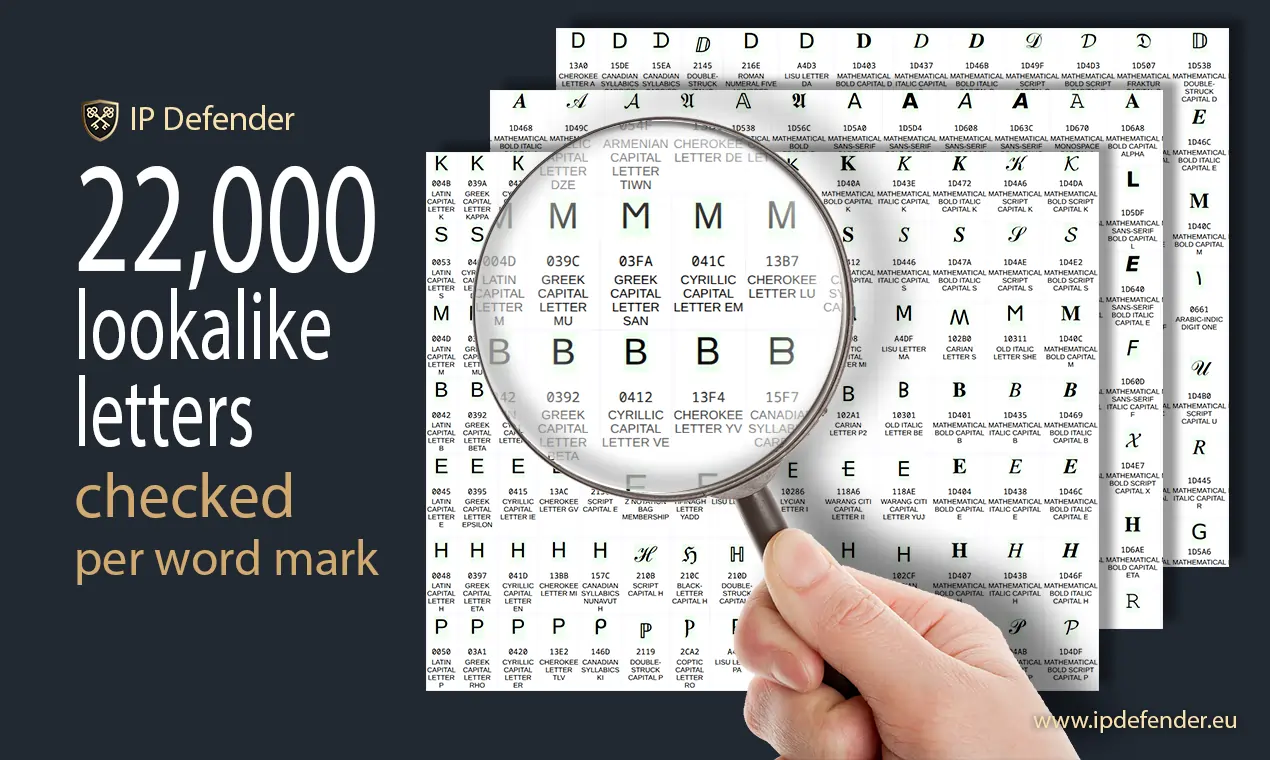
  3. 先进技术:我们的独家 AI 与算法超越同类工具,确保商标保护精准无误。
  4. 专属资源:依托尖端英伟达 AI 硬件,我们以极具竞争力的成本,提供卓越成效。
  5. 深受专业人士信赖:企业信赖我们提供的可靠、高效且主动的商标监控服务。

最新动态

Celebrities Battle AI with Trademark Power Saturday, May 16, 2026

Celebrities like Taylor Swift are using trademarks to protect their voices and likenesses against AI-generated replicas. As AI technology makes it easier to create convincing deepfakes, trademark law is being redefined to prevent confusion and unauthorized use. Trademarks now cover sound marks, visual marks, and vocal signatures, allowing celebrities to enforce their rights nationally. While challenges remain, such as proving actual use and limited protection for sensory marks, proposed laws like the NO-FAKES Act aim to provide clearer legal standards. Brand owners must proactively register trademarks and copyrights to defend against AI-driven replication, ensuring their identities and assets are protected in an evolving digital landscape.

Court Rules Cream Jar Packaging Is Functional, Not Trademarkable Saturday, May 16, 2026

A U.S. court ruled that the distinctive packaging for Sol de Janiero’s 'Brazilian Bum Bum Cream' is functional and not eligible for trade dress protection under the Lanham Act. The court found that design elements like the rounded bottom, oversized lid, and color scheme served practical purposes such as improving handling and communicating product attributes. This decision highlights the legal requirement that packaging must be non-functional to qualify for trademark protection, emphasizing the importance of evaluating design elements for both aesthetic and utilitarian roles. The ruling serves as a reminder for businesses to balance creative packaging with legal considerations, ensuring their designs do not inadvertently limit trademark rights. Companies must carefully assess whether their packaging serves functional purposes, which could impact their ability to enforce brand protections in competitive markets.

USPTO Targets 10,500 Fraudulent Trademark Filings Thursday, May 14, 2026

The U.S. Patent and Trademark Office (USPTO) has invalidated over 10,500 trademark applications and registrations due to fraudulent practices, including forged signatures and fake fees. Recent actions target foreign firms and individuals submitting applications without proper authority, with one company filing over 4,900 applications in 14 months. The USPTO has also addressed double billing and improper use of direct signature methods, highlighting the need for businesses to protect their intellectual property from fraudulent filings. These measures aim to combat widespread trademark fraud and ensure legitimate trademark owners are not unfairly disadvantaged.

2026 World Cup Legal Minefield Thursday, May 14, 2026

The 2026 FIFA World Cup is set to be a legal battleground, with brands and athletes facing complex risks from unauthorized marketing. Unauthorized use of player images or World Cup imagery can lead to multiple legal claims, including state-level right of publicity laws, false endorsement claims under the Lanham Act, and FIFA's aggressive trademark enforcement. Players are restricted from endorsing products without authorization, creating tension between personal rights and contractual obligations. Brands must avoid implying FIFA affiliation in ads without proper authorization, while players and their representatives must navigate a web of rights and obligations to avoid costly legal exposure.

Taylor Swift Files Trademark for Voice and Image Amid AI Challenges Tuesday, May 12, 2026

Taylor Swift has filed trademark applications for her voice and image, signaling a new approach to protect personal identity against AI-generated impersonation. As AI technology blurs the lines between real and synthetic content, public figures are exploring trademark law as a tool to safeguard their likenesses. Traditionally used for brand differentiation, trademarks now face scrutiny as they are applied to personal identifiers, raising legal questions about source identification in the digital age. While the effectiveness of such strategies remains uncertain, they highlight the urgent need for updated legal frameworks to address AI-driven impersonation and protect individual rights in an evolving technological landscape.

Cannabis Rescheduling Sparks IP Legal Shifts Friday, May 8, 2026

The rescheduling of marijuana from Schedule I to Schedule III has opened new legal pathways for cannabis businesses, particularly in intellectual property. While state-licensed medical marijuana operators may now pursue federal trademark registration, challenges persist due to the USPTO's focus on product descriptions and interstate commerce limitations. Patents and copyrights remain viable, but trademark applications require careful drafting to avoid recreational use misinterpretations. Legal experts advise medical marijuana businesses to act swiftly with IP counsel to secure federal trademark rights before clearer guidelines emerge.

USPTO's Role in Political Branding Sparks Legal Debate Thursday, May 7, 2026

The U.S. Patent and Trademark Office's involvement in filing a trademark for the Trump administration's 'Board of Peace' has sparked debate over the legal implications of using trademark law in political branding. The case highlights concerns about consumer confusion, misuse of public resources, and the need for transparency in trademark monitoring. Trademark law, governed by the Lanham Act, requires trademarks to be used in commerce, not just reserved. The USPTO's actions have raised questions about the boundaries of trademark protection in political contexts, emphasizing the importance of legal accountability and preventing the exploitation of public funds through misleading branding initiatives. The incident underscores the broader need for businesses and policymakers to consider the ethical and legal responsibilities of trademark use in political branding.

Swift Secures Voice and Tour Image Trademarks Against AI Replication Thursday, May 7, 2026

Taylor Swift has filed new trademark applications for her voice and a design mark from her Eras Tour, aiming to prevent unauthorized use, especially by AI systems. The filings highlight a growing trend among celebrities to secure intellectual property rights as AI-generated content becomes more prevalent. By registering her distinctive voice and visual elements, Swift may take legal action against deepfakes, political misuse, or commercial misrepresentation. This strategy aligns with similar efforts by other stars, such as Matthew McConaughey, who secured his catchphrase trademark. As AI technology advances, trademark law is emerging as a key tool for creators to protect their brand identity and control how they are represented in the digital space.

Court Misinterprets Rogers Test, Erodes Trademark Protection Wednesday, May 6, 2026

A court's misapplication of the Rogers defense in a trademark case involving the fictional 'Los Angeles Waves' has raised concerns about the future of trademark law. The court's one-letter error in interpreting the test removed the possibility of false endorsement as a basis for liability, highlighting the need for clearer legal standards. This case underscores the growing tension between intellectual property rights and free speech, as businesses and legal professionals navigate an increasingly ambiguous legal landscape.

Prince Estate and Kotero Resolve Trademark Dispute Tuesday, May 5, 2026

The Prince estate and Patty Apollonia Kotero have resolved a trademark dispute over the name 'Apollonia,' with both parties agreeing to dismiss their claims. The settlement highlights the complexities of trademark confusability and the importance of proactive trademark monitoring in high-stakes cases. The name 'Apollonia' had become synonymous with a cultural icon, raising concerns about consumer confusion in music and entertainment. The case underscores the need for clear contractual agreements and a strong understanding of trademark law to navigate the evolving intersection of personal identity and brand ownership.

了解异议窗口期

当有人提交商标注册申请时,会进入一个极为短暂的“异议期”。在此期间,任何认为该新商标可能损害其业务或与其现有品牌(含已注册及未注册商标)相冲突的人士,均可提出异议,以阻止其获准注册。

提起异议的优势在于,它比等到商标获准注册后再尝试撤销更为快捷、经济且直接。商标一旦注册,撤销便需启动独立的法律程序,不仅耗时更长、费用更高,胜诉难度也更大。

为何留存记录对保护您的品牌至关重要

保留品牌保护工作的详细记录至关重要,因为法律要求您提供使用并捍卫商标的证明,以维持专有权利。

若纠纷诉诸法庭,法官将依据注册证书、商标监测记录、销售凭证及维权行动等证据,确认您的品牌权属及是否存在侵权行为。 若无完善的文档记录,证明您的权利将变得异常困难,进而难以制止侵权或获得赔偿。 此要求基于商标法:唯有品牌所有者积极使用并维护其商标,方能获得法律保护。 完整的书面证据链让您在诉讼或谈判中更从容、更有力地应对争议,捍卫您的品牌权益。

使用 IP Defender 监控服务,可为您的品牌(含已注册及未注册商标)保护工作提供可靠且井然有序的记录。

为何必须积极维护您的商标权

仅仅注册商标是不够的;品牌所有者必须主动保护其品牌,才能维持专有权利。

商标法要求品牌权利人积极维护其商标权益。这意味着需定期监测未经授权使用或易造成混淆的近似标识,对侵权行为采取维权行动,并持续巩固品牌在市场中的影响力与声誉。

若忽视这些义务,您的商标注册可能被撤销或视为放弃,导致您丧失独占权及法律保护。

在撤销或限制商标权之前,法院和商标局会评估商标权利人是否已依法对品牌进行了积极使用、监测与保护。