














































Why Businesses Choose IP Defender
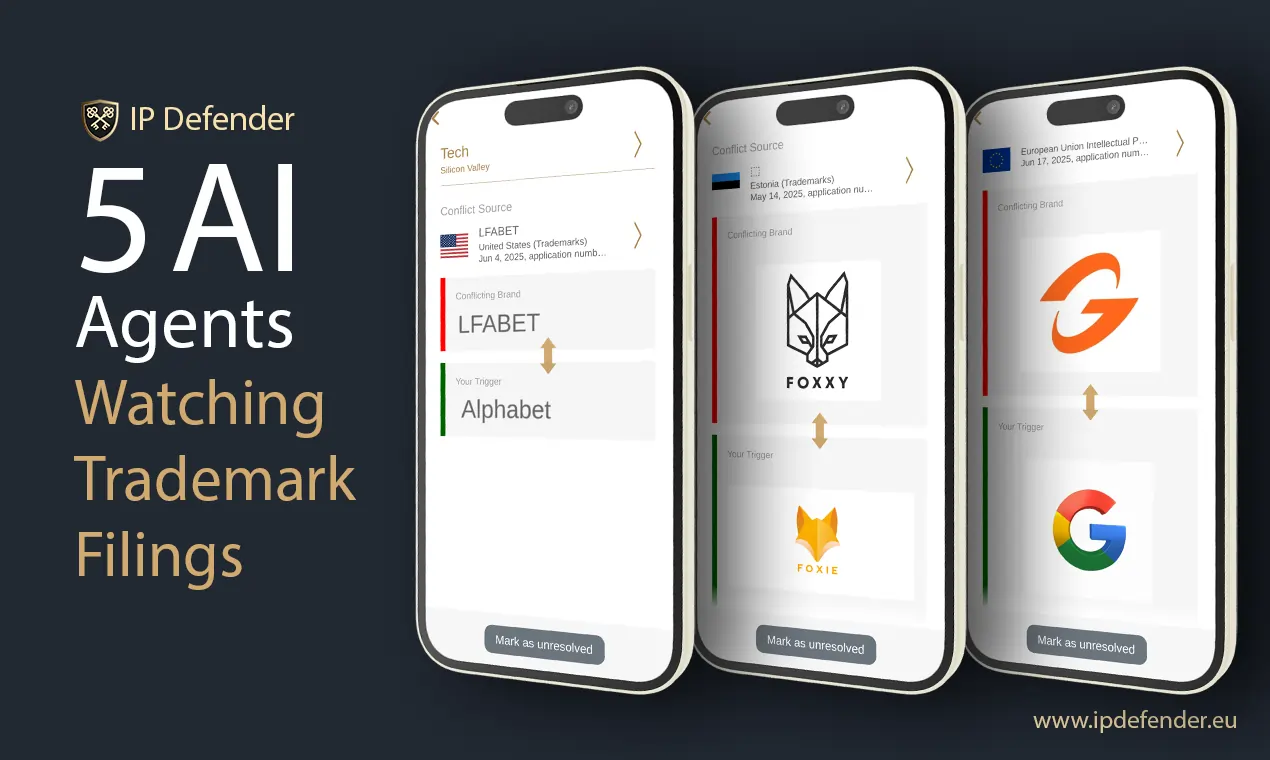
- Reduced Legal Costs: Save on legal fees by catching infringements early during the . This helps you avoid expensive court cases.
- Stronger Trademark Portfolio: Maintain a defensible trademark portfolio that signals discipline to investors and buyers, protecting your brand's valuation and growth.
- Strengthen Legal Posture: Keep thorough of your brand protection efforts to build a solid legal foundation in potential conflicts.
- Boost Brand Confidence: Keep your competitors in check and protect your brand's valuable reputation with our service.
- AI Agent Friendly: Let your own AI assistants handle trademark monitoring setup and day-to-day management for you. (See AI Assistant Setup for details.)
Risks of Not Monitoring Trademarks and Brands for Infringement
- Mergers and Acquisitions: Gaps in trademark portfolios may lead to legal issues post-merger, deterring potential buyers or investors.
- Reputation Damage: Infringers may register similar names, confusing customers and harming your brand's reputation.
- Loss of Legal Rights: Neglecting to actively monitor and enforce your brand weakens your legal protections and risks .
- Global Infringement Risks: Infringers can register trademarks in multiple countries without detection, complicating global brand protection.
Your Brand is Your Most Valuable Asset
For businesses building brand value, the verdict from business leaders and legal authorities is decisive: your brand is your ultimate asset, and its protection is non-negotiable.
Your brand is the single most important investment you can make in your business.
Of all the things that your company owns, brands are far and away the most important and the toughest.
Trademark owners must vigilantly police their marks to prevent dilution and infringement; failure to do so risks forfeiting their rights.
Why Choose IP Defender?
IP Defender delivers enterprise-grade brand protection at prices that fit any business.

- Proven Expertise: Trusted since 2015do , we’ve perfected our algorithms to deliver unmatched accuracy in trademark monitoring.
- Global Reach: Comprehensive continuous monitoring across more than 40 countries to safeguard your brand worldwide.
- Advanced Technology: Our proprietary AI and algorithms outperform other tools, ensuring precise trademark protection.
- Dedicated Resources: Powered by cutting-edge NVIDIA AI hardware, we provide premium results at competitive costs.
- Trusted by Professionals: Businesses rely on us for reliable, efficient, and proactive trademark monitoring.
Latest News
Generative AI allows hyper-realistic replication of celebrity voices and likenesses, challenging existing intellectual property frameworks. Traditional trademark protection often fails because it requires the sound to identify a commercial source rather than merely being recognizable or entertaining. Consequently, legal reliance shifts to state right-of-publicity laws and emerging regulations like Tennessee's ELVIS Act.The central legal distinction remains between transformative commentary, which enjoys First Amendment protections, and unauthorized commercial endorsement, where AI replicas are used to market products. As federal standards evolve, advertisers must determine whether they are using a celebrity's identity for discussion or exploiting it to drive sales, a determination that currently dictates liability in the digital landscape.
China’s revised Trademark Law, effective January 1, 2027, shifts focus from registration to genuine commercial use. The overhaul introduces financial penalties for bad-faith filings, compresses the opposition period to two months, and explicitly allows dynamic marks. These changes significantly increase enforcement rigor and require global brands to adopt real-time monitoring strategies.
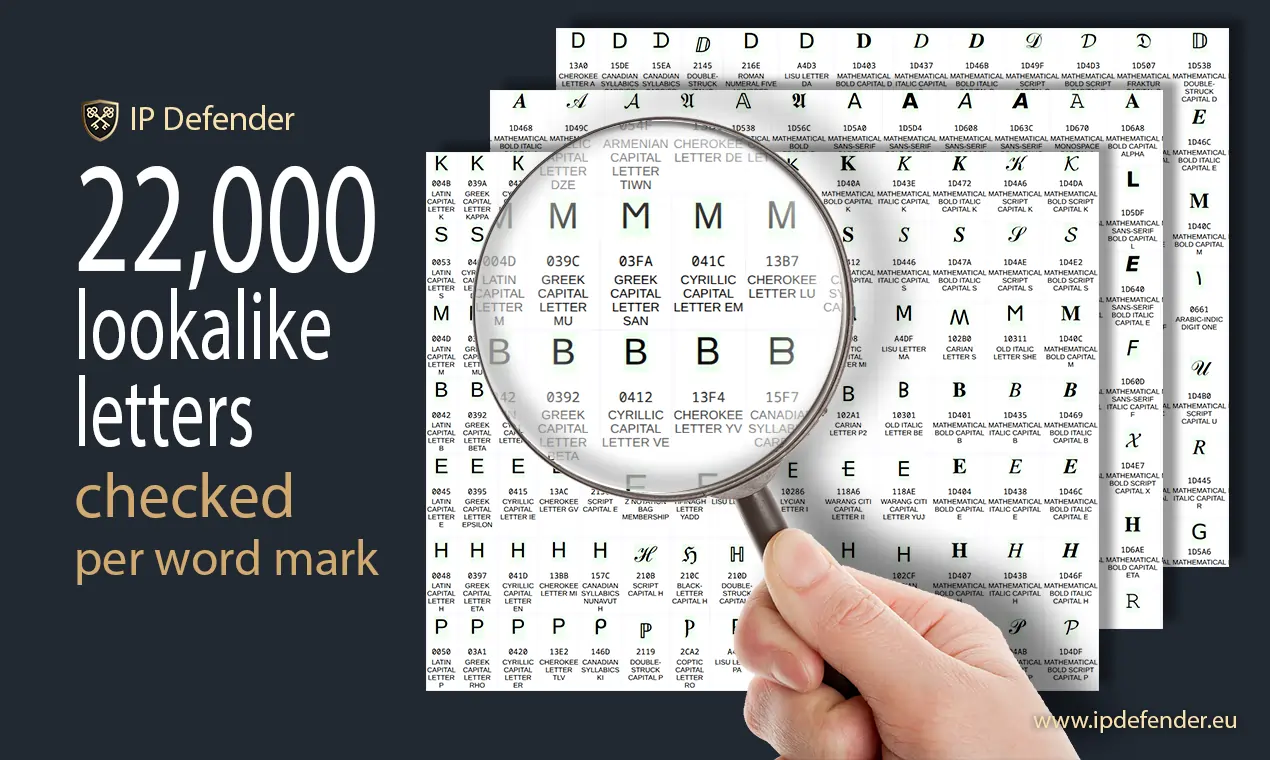
Trademark monitoring watches new filings that resemble your brand so you can act in the opposition window. Filing is a snapshot. A watch is ongoing. IP Defender is complementary to counsel, with 5 AI agents, 11 detection layers, 22,000+ character-fraud patterns, and public pay-per-use prices.
China is implementing a comprehensive overhaul of its Trademark Law on January 1, 2027, marking the first total structural revision since the statute's inception. This legislative update expands the framework and shifts focus from passive registration to active enforcement, effectively targeting trademark squatting through stringent intent requirements.The revised regulations accelerate opposition periods to two months and enhance protections for well-known marks across legal domains. Authorities now possess the power to cancel trademarks for non-use on their own initiative and impose heavy fines on malicious actors. These changes compel multinational corporations to align IP strategies with genuine commercial operations and maintain rigorous evidence of use.
The European Union Intellectual Property Office rejected Supermac’s registration for its name, citing a likelihood of confusion with McDonald’s Big Mac. Conversely, the UK Intellectual Property Office dismissed the opposition, distinguishing between consumer association and actual commercial confusion. This split highlights how trademark protection varies significantly across jurisdictions.
A federal court in Ohio refused to dismiss Timken Company's trade dress infringement suit against RevHD LLC, finding the claims of non-functional trade dress, false designation of origin, and unfair competition plausible. The ruling keeps the fight over confusable product appearance alive and underscores how close visual cousins in industrial goods can still trigger costly federal litigation.
Filing a trademark is only a snapshot. Trademark monitoring watches new filings that may resemble your brand so you can act in the opposition window. IP Defender is the complementary watch next to counsel, not a filing mill. 5 AI agents, 11 layers, 40+ countries, pay-per-use.
Cuba has implemented Decree-Law 103, updating its intellectual property regime to align with international standards and enhance trademark protection. The legislation explicitly allows for the registration of non-traditional marks, such as sound marks, while introducing stricter examination timelines and a standardized 60-day opposition period.Key provisions include grounds for invalidating bad faith filings and mandating cancellation of trademarks unused for three consecutive years. To improve administrative efficiency, the new framework permits electronic communications with the Industrial Property Office. Additionally, a dual-currency fee structure distinguishes between domestic entities paying in Cuban pesos and foreign investors paying in US dollars.
A federal judge in Ohio refused to dismiss Smucker’s trademark and dilution claims against Trader Joe’s over crustless PB&J sandwiches that allegedly copy the round, crimped Uncrustables shape, bite-mark packaging, and overall trade dress. The ruling keeps the lookalike fight alive and shows how close visual cousins can drag a national retailer into federal court.
The European Commission has issued a record €550 million fine to AliExpress under the Digital Services Act for failing to mitigate systemic risks through inadequate resource allocation and flawed algorithmic oversight. Concurrently, the EU Intellectual Property Office rejected singer Rosalía’s application to register 'LUX' as a trademark, citing its descriptive nature in Romania rather than distinctiveness. These rulings demonstrate stricter regulatory enforcement regarding platform accountability and intellectual property distinctiveness.
Understanding the Opposition Window
When someone applies for a trademark, there is a very short period of time called the opposition window. During this window, anyone who believes the new trademark would harm their business or conflict with their existing brand can file an opposition to stop it from being registered.
The advantage of filing an opposition is that it is faster, cheaper, and more straightforward than waiting until the trademark is fully registered and then trying to cancel it later. Once a trademark is registered, cancellation requires a separate legal process that is longer, more expensive, and harder to win.
Why Keeping Records Matters for Protecting Your Brand
Keeping detailed records of your brand protection efforts is crucial because the law requires proof that you use and defend your trademark to maintain exclusive rights.
If a dispute goes to court, judges rely on this evidence - such as registrations, monitoring efforts, sales records, and enforcement actions - to confirm your ownership and whether someone infringed on your brand. Without proper documentation, it becomes much harder to prove your rights, making it difficult to stop misuse or get compensation. This requirement is based on trademark laws that grant protection only when the brand owner actively uses and defends their mark. This paper trail makes it easier and stronger to fight any disputes and defend your brand in court or negotiations.
Using IP Defender monitoring services provides a reliable and organized record of your brand protection activities.
Why You Must Actively Maintain Your Trademark Rights
Simply registering a trademark is not enough; owners must proactively protect their brand to keep their exclusive rights.
Trademark law requires brand owners to actively police their trademarks. This means regularly monitoring for unauthorized or confusingly similar uses, enforcing your rights against infringers, and maintaining your presence and reputation in the marketplace.
If you neglect these responsibilities, your registration can be canceled or deemed abandoned, causing you to lose exclusive rights and protection.
Before cancelling or limiting trademark rights, courts and trademark offices evaluate whether the trademark owner has actively used, monitored, and protected the brand as required by law.