














































Why Businesses Choose IP Defender
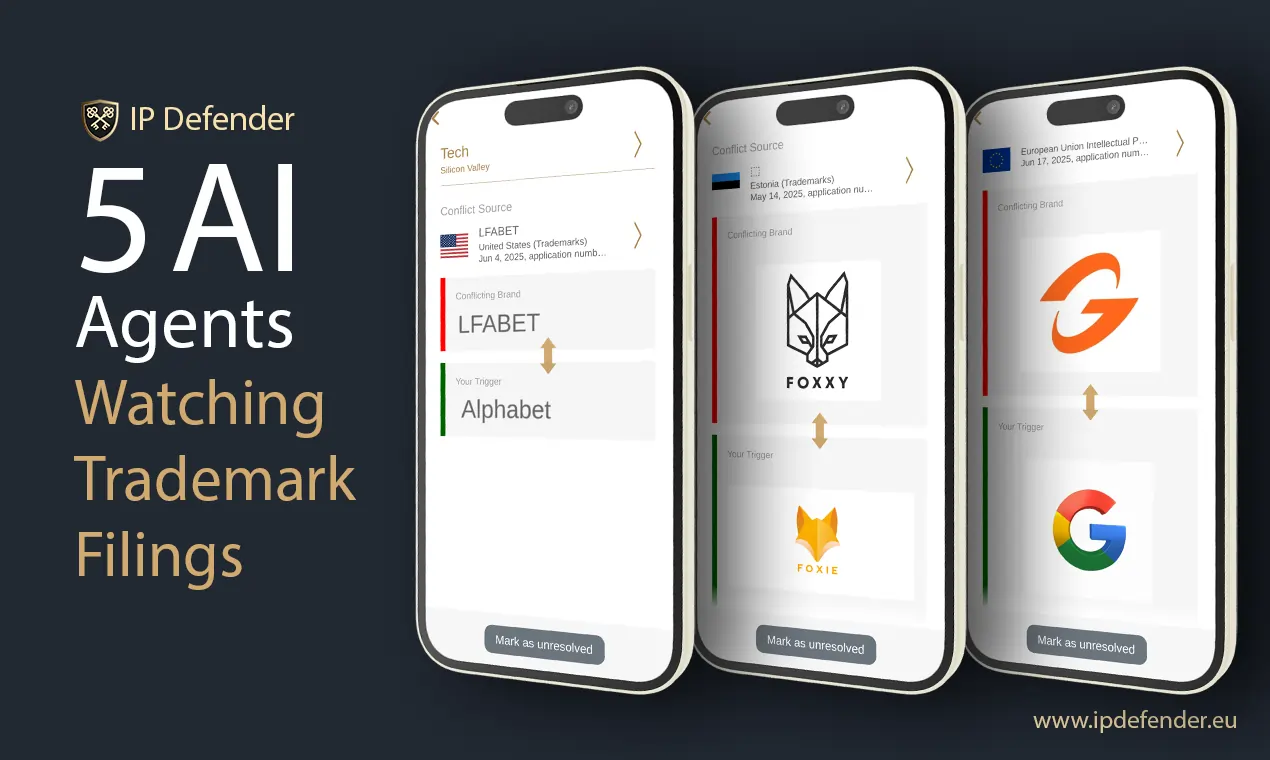
- Reduced Legal Costs: Save on legal fees by catching infringements early during the . This helps you avoid expensive court cases.
- Stronger Trademark Portfolio: Maintain a defensible trademark portfolio that signals discipline to investors and buyers, protecting your brand's valuation and growth.
- Strengthen Legal Posture: Keep thorough of your brand protection efforts to build a solid legal foundation in potential conflicts.
- Boost Brand Confidence: Keep your competitors in check and protect your brand's valuable reputation with our service.
- AI Agent Friendly: Let your own AI assistants handle trademark monitoring setup and day-to-day management for you. (See AI Assistant Setup for details.)
Risks of Not Monitoring Trademarks and Brands for Infringement
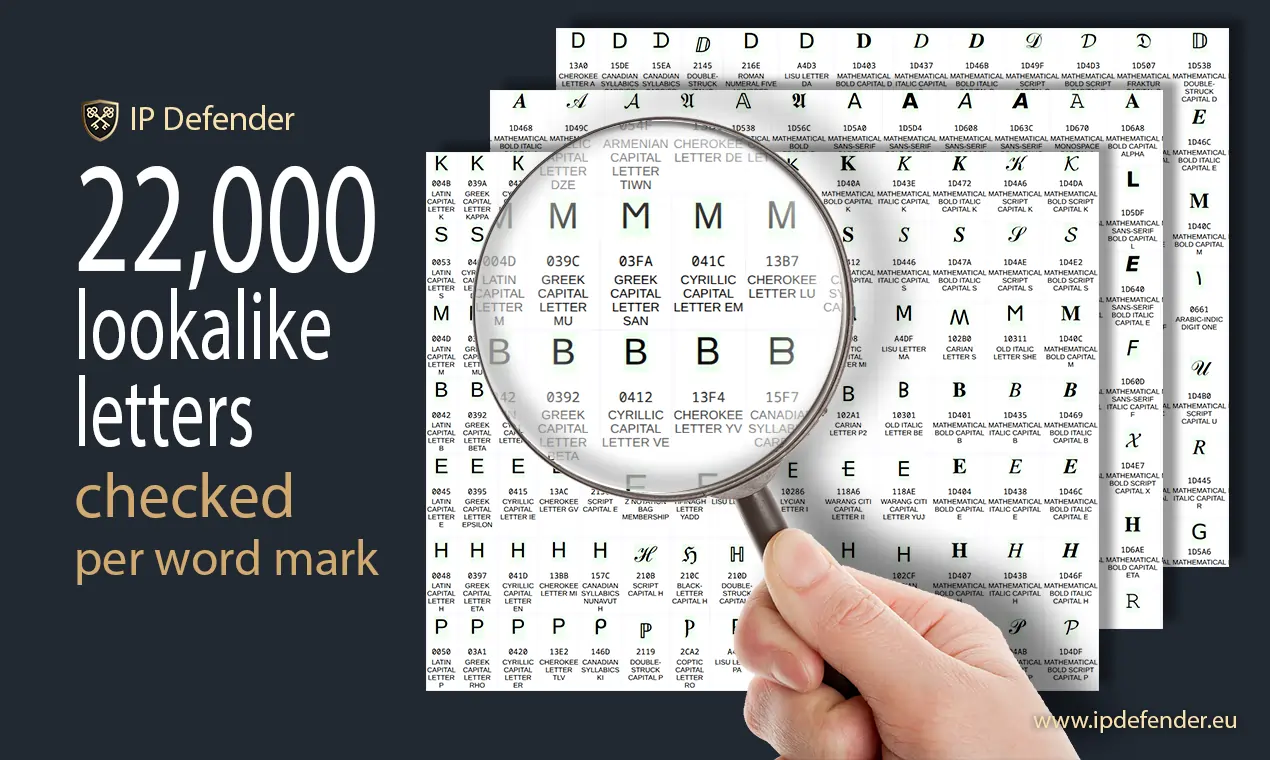
- Mergers and Acquisitions: Gaps in trademark portfolios may lead to legal issues post-merger, deterring potential buyers or investors.
- Reputation Damage: Infringers may register similar names, confusing customers and harming your brand's reputation.
- Loss of Legal Rights: Neglecting to actively monitor and enforce your brand weakens your legal protections and risks .
- Global Infringement Risks: Infringers can register trademarks in multiple countries without detection, complicating global brand protection.
Your Brand is Your Most Valuable Asset
For businesses building brand value, the verdict from business leaders and legal authorities is decisive: your brand is your ultimate asset, and its protection is non-negotiable.
Your brand is the single most important investment you can make in your business.
Of all the things that your company owns, brands are far and away the most important and the toughest.
Trademark owners must vigilantly police their marks to prevent dilution and infringement; failure to do so risks forfeiting their rights.
Why Choose IP Defender?
IP Defender delivers enterprise-grade brand protection at prices that fit any business.

- Proven Expertise: Trusted since 2015do , we’ve perfected our algorithms to deliver unmatched accuracy in trademark monitoring.
- Global Reach: Comprehensive continuous monitoring across more than 40 countries to safeguard your brand worldwide.
- Advanced Technology: Our proprietary AI and algorithms outperform other tools, ensuring precise trademark protection.
- Dedicated Resources: Powered by cutting-edge NVIDIA AI hardware, we provide premium results at competitive costs.
- Trusted by Professionals: Businesses rely on us for reliable, efficient, and proactive trademark monitoring.
Latest News
No trademark office emails you because a lookalike arrived. The USPTO says on its own site that it does not monitor, EUIPO does not examine relative grounds at all, and WIPO only notifies the offices. Here are the three clocks, and the one question that sorts any provider.
EUIPO does not check new filings against earlier rights, so nobody tells you a lookalike arrived. Europe runs three separate feeds, EU trade marks, national filings and Madrid designations, and a watch on one of them cannot see the other two. Here is what to buy and the four questions that sort providers fast.
Trademark MCP servers let your AI assistant read a register instead of guessing. Here is what Goalie IP, GleanMark, MarkMesh, TMCopilot, trademarc and IP Defender each actually cover, which offices they miss, how they match lookalikes, and why a watch has to live in your own account.
A Delhi High Court judge slammed an interim injunction on a local cloud kitchen for copying the Benne name of a fast-growing butter-dosa chain. The lookalike appeared on Swiggy and Instagram serving the same cuisine, forcing the junior user to stop before it could harden into a permanent rival.
A Malaysian Court of Appeal ruling establishes that reposting content featuring a third-party trademark on corporate social media accounts constitutes use in the course of trade, potentially triggering trademark liability. The decision involves Motionquest, which reposted videos containing the MAXXOIL sign despite prior litigation requiring a local rebrand to 'MAXX PERFORMANCE.' The court determined that electronic media accessible online falls squarely within the definition of advertising under Malaysia’s Trademarks Act 2019, regardless of whether the physical goods sold bear the specific mark. Furthermore, the defendant was found to have had reason to believe the use was unauthorized due to existing legal records, negating claims of innocent oversight. While damages were denied due to lack of proof regarding actual sales volume or tangible product confusion, the case highlights expanding enforcement boundaries for brand owners and underscores the critical need for multinational distributors to verify local intellectual property rights before disseminating global marketing assets.
A recent legal opinion suggests defendants in EU trademark infringement suits may challenge a mark's validity at the European Union Intellectual Property Office even after missing initial court deadlines. This interpretation allows for indefinite pauses in litigation, empowering competitors to stall enforcement through parallel EUIPO proceedings rather than immediate counterclaims. The strategy exploits regulatory silence on waiving rights, creating significant delays that drain resources while keeping infringement cases in limbo until validity is resolved across multiple appeal levels.
ICANN has published details on 1,616 new generic top-level domain (gTLD) applications, marking a pivotal moment for brand protection and digital identity management. This release exposes the specific entities vying for control over web coordinates, revealing potential competitors and strategic moves in the '.brand' space before the 2026 rollout.The publication highlights growing contention sets where multiple applicants seek identical strings, signaling intense commercial value and imminent legal disputes. Businesses must monitor these filings closely during the upcoming string replacement period and confirmation days to identify risks early. Proactive assessment of applicant intent is essential for navigating the next generation of domain-name conflicts.
China's draft amendment to the E-Commerce Law significantly expands platform obligations and penalties for trademark infringement. The revised rules broaden the definition of e-commerce platforms to include livestreaming and social commerce, closing loopholes used to avoid liability. Regulators gain enhanced investigation powers, such as accessing bank accounts and seizing evidence, while penalties for non-compliance rise to 5% of annual turnover.The draft shifts enforcement focus from removing infringing listings to identifying and excluding repeat offender sellers. Additionally, platforms cannot evade responsibility by outsourcing compliance tasks. Rights holders must adopt proactive monitoring strategies targeting seller entities rather than relying solely on passive takedown notices to protect their brands in this evolving regulatory landscape.
Three tools now answer trademark questions inside ChatGPT and Claude by name. All three tell you whether a name is free today. None of them tell you what appeared on the register since you registered, and that gap is exactly where lookalike filings get missed.
The Court of Justice of the European Union is poised to redefine procedural dynamics in intellectual property disputes through the Bodegas Sanviver case. The central issue involves Article 132(1) of the EU Trade Mark Regulation, which currently mandates courts to halt infringement proceedings if a validity challenge has been filed at the EUIPO. Historically, this applied only when challenges preceded lawsuits, but an Advocate General's recent opinion suggests it applies regardless of timing.
Understanding the Opposition Window
When someone applies for a trademark, there is a very short period of time called the opposition window. During this window, anyone who believes the new trademark would harm their business or conflict with their existing brand can file an opposition to stop it from being registered.
The advantage of filing an opposition is that it is faster, cheaper, and more straightforward than waiting until the trademark is fully registered and then trying to cancel it later. Once a trademark is registered, cancellation requires a separate legal process that is longer, more expensive, and harder to win.
Why Keeping Records Matters for Protecting Your Brand
Keeping detailed records of your brand protection efforts is crucial because the law requires proof that you use and defend your trademark to maintain exclusive rights.
If a dispute goes to court, judges rely on this evidence - such as registrations, monitoring efforts, sales records, and enforcement actions - to confirm your ownership and whether someone infringed on your brand. Without proper documentation, it becomes much harder to prove your rights, making it difficult to stop misuse or get compensation. This requirement is based on trademark laws that grant protection only when the brand owner actively uses and defends their mark. This paper trail makes it easier and stronger to fight any disputes and defend your brand in court or negotiations.
Using IP Defender monitoring services provides a reliable and organized record of your brand protection activities.
Why You Must Actively Maintain Your Trademark Rights
Simply registering a trademark is not enough; owners must proactively protect their brand to keep their exclusive rights.
Trademark law requires brand owners to actively police their trademarks. This means regularly monitoring for unauthorized or confusingly similar uses, enforcing your rights against infringers, and maintaining your presence and reputation in the marketplace.
If you neglect these responsibilities, your registration can be canceled or deemed abandoned, causing you to lose exclusive rights and protection.
Before cancelling or limiting trademark rights, courts and trademark offices evaluate whether the trademark owner has actively used, monitored, and protected the brand as required by law.